
Suspended solids
Suspended solids consist of small particles that remain floating in water. These may include clay, silt, sand, concrete residues, or other fine particles originating from earthworks and construction activities. Algae and microorganisms can also be included. An important characteristic is that these particles often bind to other contaminants — such as metals, nutrients, and organic substances — and can therefore act as carriers of pollution within aquatic environments.
Environmental impact
High levels of suspended solids not only make the water turbid, but can also affect ecosystems in several ways:
- Reduced light penetration – turbid water decreases light transmission, which affects photosynthesis in aquatic plants and algae. This can lead to lower oxygen production and ecological imbalances.
- Oxygen depletion during sedimentation – when particles settle on the bottom, they can create oxygen-poor conditions in the sediment, which severely impacts bottom-dwelling organisms.
- Habitat degradation – accumulated sediment can cover fish spawning grounds and destroy habitats for other aquatic species.
- Transport of contaminants – because particles bind metals, nutrients, and organic pollutants, they can spread contaminants further through water systems.
How suspended solids occur
Suspended solids often arise during excavation, trenching, and other soil-related work, where soil and clay are released and carried with water. Concrete and injection work contribute particularly fine particulate material that is difficult to remove. Stormwater running across construction sites or paved surfaces can also transport particles, dirt, and chemicals into stormwater systems and nearby water bodies.
Treatment
Suspended solids are difficult to remove without technical treatment, as the smallest particles do not settle on their own. For this reason, flocculation is used, causing particles to bind together into larger flocs that can settle in separation stages such as tanks, containers, or lamella separators.
Swedish Hydro Solutions uses chitosan in the flocculation process — an effective and biodegradable substance that helps fine particles form larger aggregates. When flocculation works well, treatment becomes both faster and more efficient, resulting in clearer water and significantly improved water quality.
In some cases, flocculation is complemented by gravity filters or pressurized filters, depending on which type is most effective for the specific conditions.
Read more about the technology
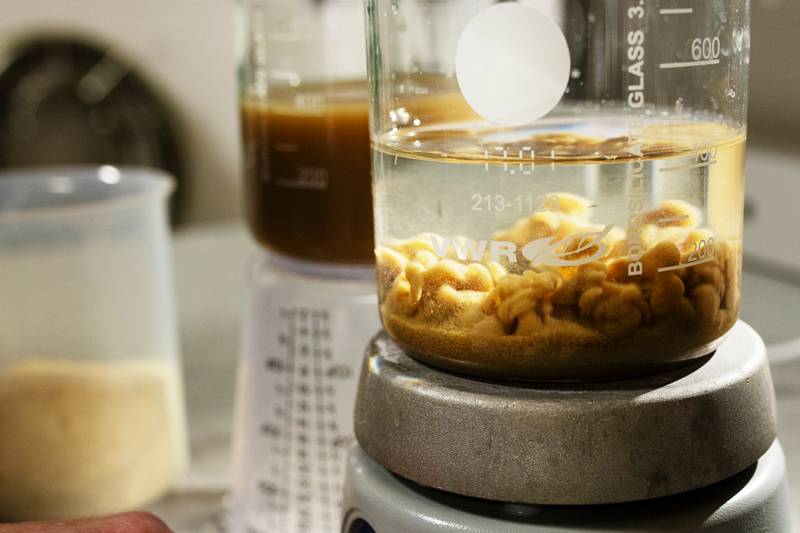
Chitosan
Highly efficient treatment of turbid water through flocculation and sedimentation using chitosan — a biodegradable flocculant extracted from crab shells.
Sedimentation
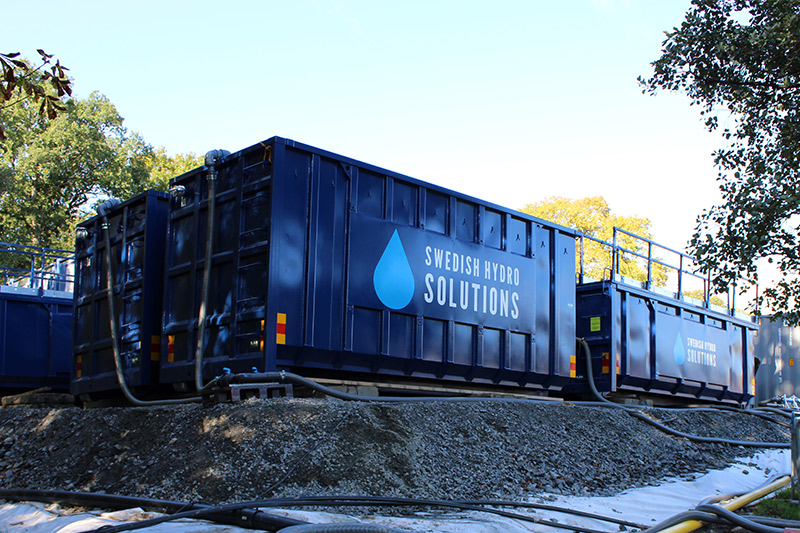
Sedimentation lets suspended particles settle and separate from the water. We use both sedimentation containers and lamella clarifiers for efficient removal.
Projects with high levels of suspended solids

Jernhusen, Region City
Jernhusen planned a new district, Region City, north of Gothenburg Central Station on former fill land where a fuel station and boiler house once stood.
Hagalund tunneling project
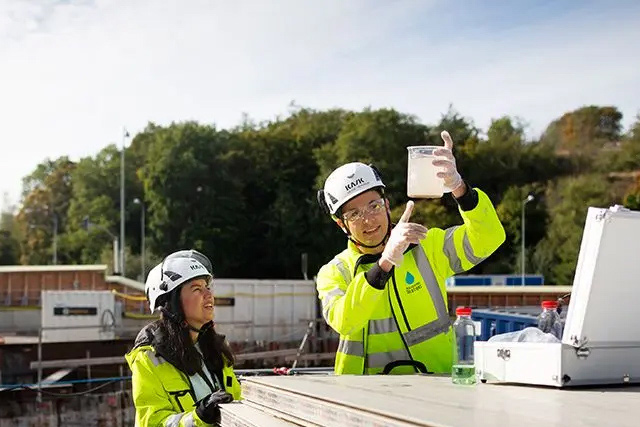
Chitosan flocculation proved highly effective in large‑scale tunneling work, leading Implenia to acquire a full system for their project.
Malmö new hospital area
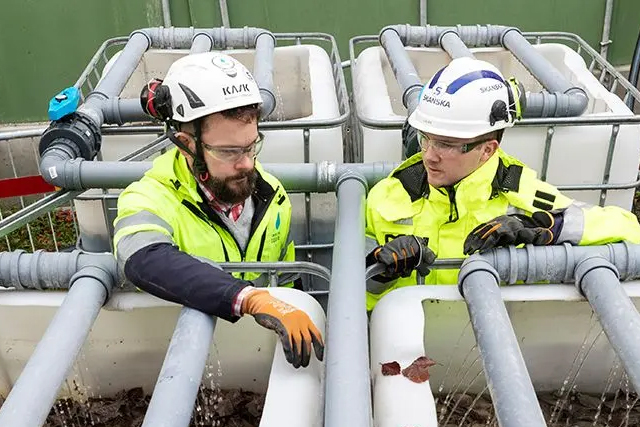
Groundwater at Malmö’s new hospital site contained chlorinated solvents, requiring a chemical‑free treatment solution during deep excavation.
Do you have more questions about suspended solids?
Need support managing high levels of suspended solids in your project?
Get in touch, and one of our specialists will guide you further.