PFAS substances
PFAS is one of the most discussed contaminants in water today. The substance group consists of thousands of variants, all characterized by extreme persistence. PFAS have been used in everything from firefighting foam and textiles to industrial processes and consumer products. As a result, traces of PFAS can now be found in soil, water, and even in humans and animals.
PFAS are often referred to as “forever chemicals” because they do not break down in the environment. Once they enter water, they remain for a very long time and can spread throughout ecosystems. Several PFAS compounds are suspected to be harmful to both humans and wildlife, affecting immune function, reproduction, and hormonal systems. Because many PFAS compounds are water‑soluble, they can travel long distances from the point of release. Many PFAS variants are already regulated or are in the process of being restricted within the EU due to their significant health risks.
Where does PFAS come from?
PFAS have been used in a wide range of products and industrial processes. Firefighting foam used at airports and training sites is one of the most common sources, but PFAS are also found in textile coatings, food packaging, cleaning agents, and various industrial applications. Today, PFAS are found in soil, groundwater, and surface water — often as a legacy of historical activities, but also from ongoing releases.
Different technologies for different chain lengths
The challenge with PFAS lies both in their extremely low concentrations and in the large variation among the thousands of compounds that exist. PFAS are often categorized by the length of their carbon chain — and chain length determines which treatment technologies are most suitable. Because concentrations in water are so low, often at the nanogram level, a verified and reliable treatment technology is essential.
PFAS therefore place higher demands on water treatment than most other contaminants — and will remain a critical issue for a long time.
Long‑chain PFAS can often be captured effectively by filter media, while short‑chain and ultra‑short‑chain PFAS are more likely to pass through treatment stages. Swedish Hydro Solutions uses systems based on both activated carbon and ion‑exchange media. In many cases, a combination of the two technologies works best, with activated carbon as the first step. Because short‑chain PFAS break through carbon more quickly, ion‑exchange technology provides an important complement. The resin used in such systems is highly effective at capturing short‑chain PFAS, but each project must be evaluated individually.
Activated carbon or Ion‑exchange media?
Activated carbon removes both short‑ and long‑chain PFAS, but the media becomes saturated relatively quickly, allowing short‑chain PFAS to break through. The filter can remain effective against long‑chain PFAS long after the first breakthrough. To achieve complete treatment performance, the filter media must therefore be replaced frequently.
Ion‑exchange media consists of a specialized electrically charged resin. This method is highly effective against short‑chain PFAS but is initially more costly compared with activated carbon. A key advantage of the systems offered by Swedish Hydro Solutions is that the resin can be regenerated and reactivated on site within the treatment system, instead of being transported off‑site to a specialized facility for destruction — which is the standard approach for many other systems.
A project‑specific assessment is therefore required, considering parameters such as flow rates, project duration, and contamination levels, to determine which solution is most suitable.
Swedish Hydro Solutions has extensive experience with PFAS treatment from projects across the country and is always available to discuss the right solution for your specific case.
In‑depth information about PFAS
Learn more about PFAS
Learn more about what PFAS are, why they pose environmental and health risks, and which treatment methods are most effective for different PFAS types.

PFAS equipment
PFAS treatment with proven technologies that reduce a wide range of PFAS, including both long‑ and short‑chain compounds, delivering stable performance over time.
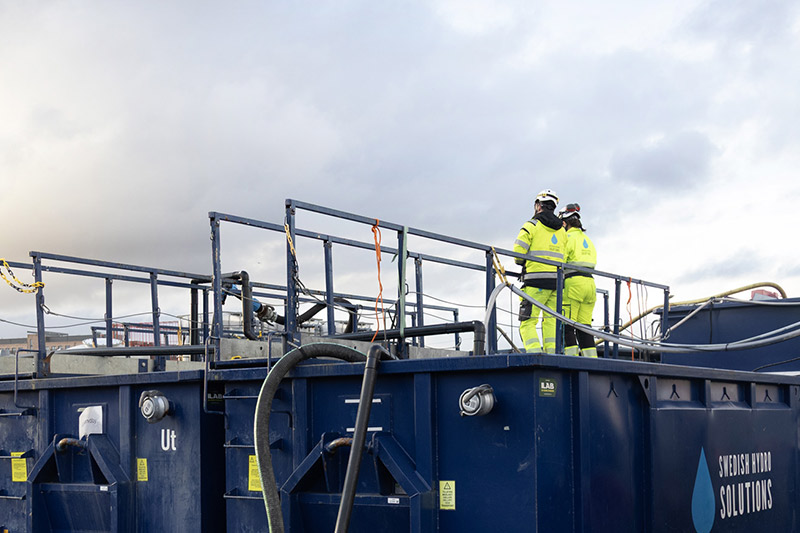
Projects involving PFAS treatment
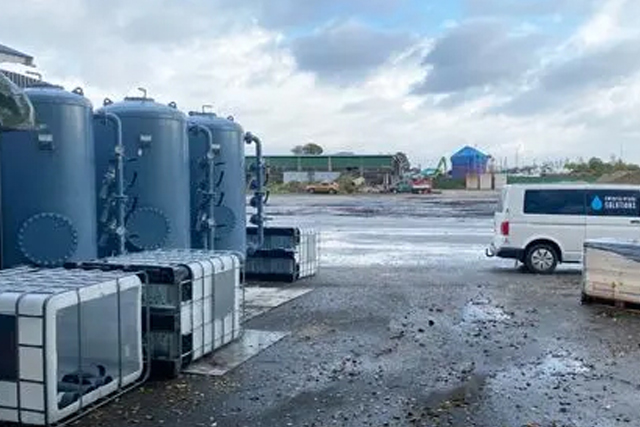
Bo Altenstam
Bo Altenstam AB in Hörby is a licensed waste operator in Sweden handling cable recycling and various types of metal waste.

Oceana, Liseberg
A major fire at Oceana Liseberg in February 2024 contaminated runoff, and Swedish Hydro Solutions quickly installed treatment for PFAS and metals.
Do you have more questions about PFAS?
Need support evaluating treatment options or planning your PFAS strategy?
Get in touch, and one of our specialists will guide you further.