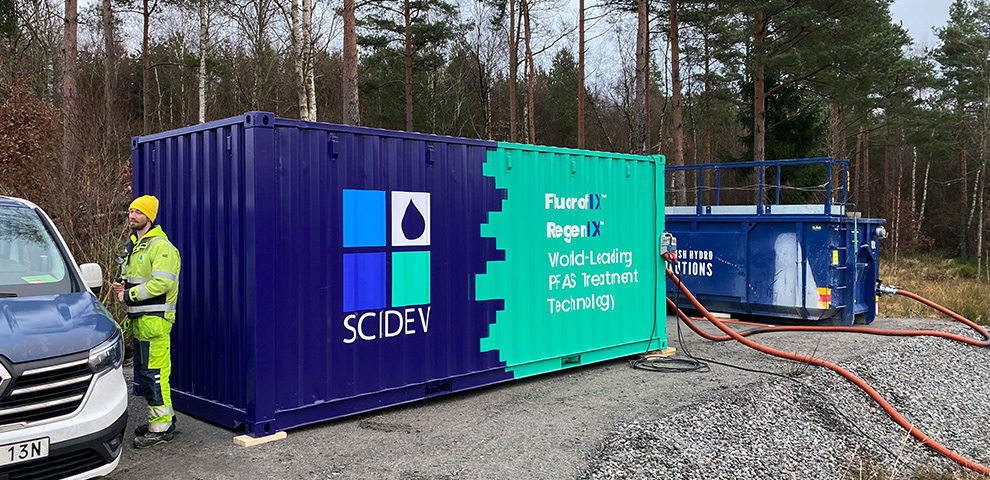
PFAS treatment with ion‑exchange technology.
Ion‑exchange technology
FluorofIX® is a specialized ion‑exchange technology for water treatment that uses ion‑exchange media designed to selectively bind PFAS molecules and capture them through ion‑exchange interactions. RegenIX™ is integrated into the system design, allowing the ion‑exchange media to be regenerated on site. This reduces costly media replacements, minimizes waste volumes, and can lower operational costs by up to 79%.
Activated carbon (GAC) and BioMedia®
Activated carbon and BioMedia® are both filtration media used to bind and adsorb contaminants — including long PFAS chains — but they operate in different ways. They can also reduce short PFAS chains, although these compounds typically break through the filter more quickly. For this reason, these technologies are particularly suitable for water where most or all PFAS compounds consist of long PFAS chains.
In activated carbon treatment, water passes through filters filled with granular activated carbon, which adsorbs PFAS molecules from the water. This process, known as adsorption, relies on intermolecular forces between the PFAS molecules and the carbon surface.
BioMedia® is a biodegradable filtration media that combines physical and biological filtration, making it particularly suitable for long‑term treatment and sustainable applications. It can also promote the biological breakdown of certain substances, making it effective in long‑duration use cases.
These media are often combined to manage PFAS‑contaminated water as well as elevated concentrations of other contaminants, such as metals.
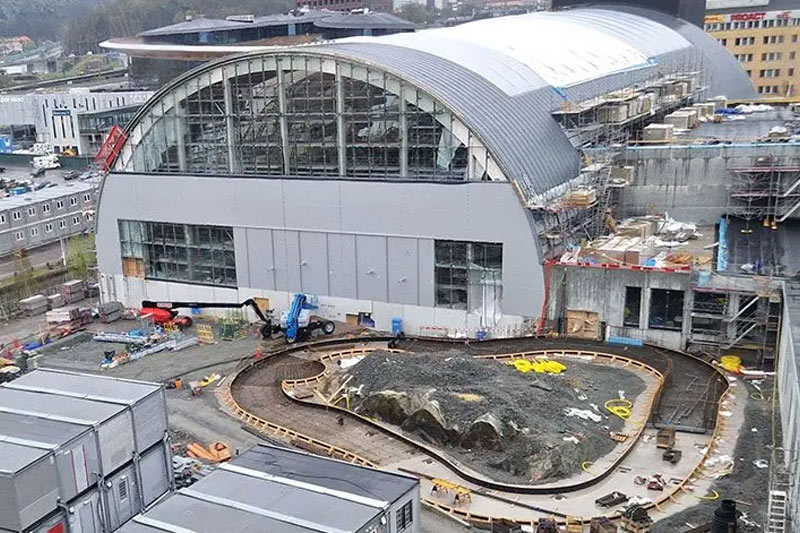
Treatment of phthalates, zinc, copper, and PAHs from firefighting water, spill water, and stormwater at Oceana, Liseberg.
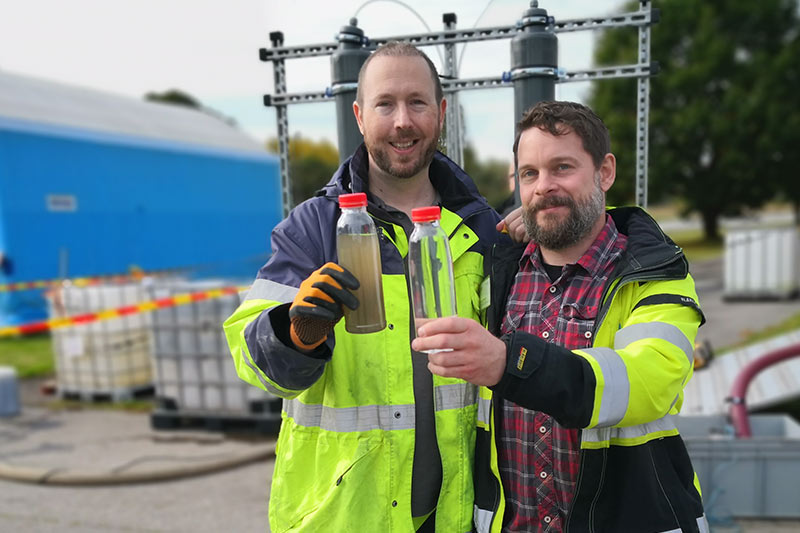
Swedish Hydro Solutions treated PFAS in MSB’s firefighting water down to non‑detectable levels.
The right treatment technology for different PFAS chains
PFAS consist of thousands of variations and are highly resistant to degradation. They are complex substances, and not all PFAS compounds behave the same way — meaning different PFAS types may require different treatment technologies. It is therefore not realistic to expect that a solution effective in one project will perform the same way in the next. As mentioned earlier, discussions often focus on short and long PFAS chains, and it is important to consider their individual risk profiles when selecting a treatment technology.
Short PFAS chains
Short PFAS chains generally exhibit higher solubility in water, which allows them to spread more easily through water sources. As a result, technologies such as activated carbon tend to be less effective for these compounds, as they do not bind strongly to the carbon surface. For short PFAS chains, ion‑exchange technologies are often a better option because they can selectively capture these smaller molecules.
Long PFAS chains
Long PFAS chains tend to have lower water solubility and bind more strongly to particles and sediments. This makes them well‑suited for treatment with activated carbon and BioMedia®. In some cases, effective management of long PFAS chains may require a combination of treatment methods — such as activated carbon, advanced oxidation, and ion‑exchange — to ensure reliable performance.
A thorough assessment of risks and treatment needs is essential for identifying the most effective technology. This is why each project begins with a detailed review of documentation and site conditions before a solution is proposed. Water samples and treatment tests are used to ensure that the selected technology is tailored to the specific requirements of each project.
As noted above, solutions that work well for some PFAS types will not necessarily be effective for others. This makes individual evaluation and proper system design critical when choosing a treatment strategy.
Questions about PFAS?
Contact our specialists for more information about PFAS and available treatment technologies. We’re happy to help you find the right solution for your needs.