West Link: Capacity and flexibility crucial aspects for NCC
The Central Station project is NCC’s largest contract ever, one stage as part of the major West Link infrastructure construction project in Gothenburg. Swedish Hydro Solutions has been contracted for its water management. At the hight of the operation, as many as seven individual treatment systems have been running simultaneously.
The so-called “West Link” (Västlänken) is a multi billion Euro project, is to deliver a rail tunnel for commuter trains that will run right underneath the whole city centre of Gothenburg. The project is divided into five stages, with NCC being responsible for two of these: “Korsvägen” and “Central Station”.
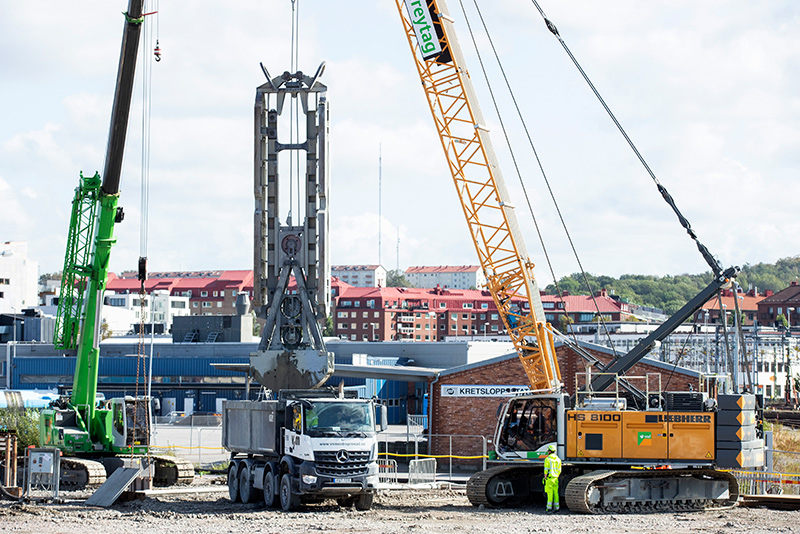
The latter part (also the largest) stretches from the Kanaltorget square, situated next to the Nordstan shopping center, all the way to “Skansen Lejonet” and terminates with a bridge over the E6 highway. This working area is about two kilometers long and one hundred meters wide.
Several hundred people are working every day on this section, with operations expected to continue until around 2026. A large and complicated planning puzzle is being executed, with many stakeholders involved in a central location that is undergoing rapid change.
Careful monitoring of the groundwater level
The West Link is not the only construction project underway in the area. Nearby, the E45 is being lowered underground and the new Hisingsbron is being built. It’s no coincidence the area is known as “the Gothenburg Pit.” Ellen Samuelsson explains that the many large construction projects, the clay‑rich ground, and the proximity to the river have resulted in strict requirements to avoid lowering the groundwater level during construction. Doing so could cause surrounding buildings to settle. NCC is excavating soil and clay down to more than twenty meters, well below the groundwater level.
– The river pushes in and risks entering the excavations, so we need strong capacity in the water treatment. We have to pump the water away – but not too much, or we risk lowering the groundwater, says Ellen Samuelsson.
The ground is not only clay‑rich but also contaminated by more than a century of industrial activity. Within the terminal area, oil has leaked, and railway sleepers stored in several layers have contaminated the ground with tar‑based substances. Even further back, this area was seabed, so the entire rail yard is built on fill material containing both heavy metals and tar residues.
Several hundred people work daily on this project stage, which is expected to continue until around 2026. It is a large and complex puzzle, involving many stakeholders in a highly central location undergoing rapid change.
– A major challenge is that the area is so long and crossed by roads needed to keep inner‑city traffic functioning, says Ellen Samuelsson, Environmental Manager at NCC for the Centralen stage.
– En stor utmaning är att området är så långt och genomkorsat av vägar för att trafiken i innerstaden ska fungera, säger Ellen Samuelsson, miljöchef på NCC för deletapp Centralen.
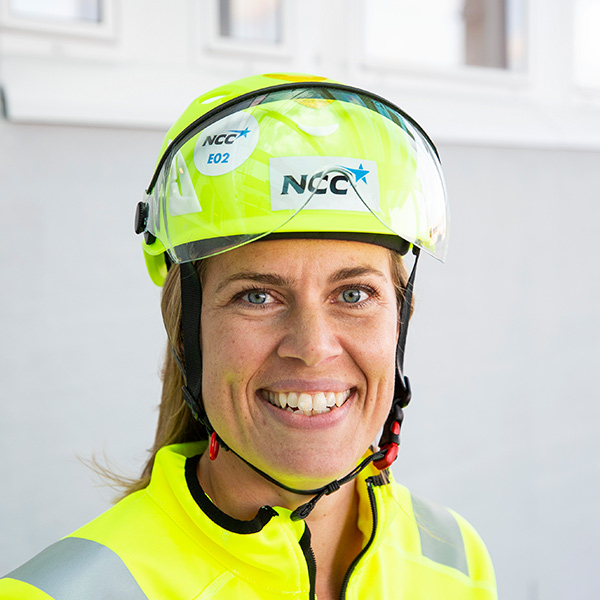
It is incredibly positive that it is environmentally sustainable. It is also a robust system that is easy to maintain. We can manage much of it ourselves.
— Ellen Samuelsson, Environmental Manager for the Centralen section, NCC
Flexible multi-system treatment
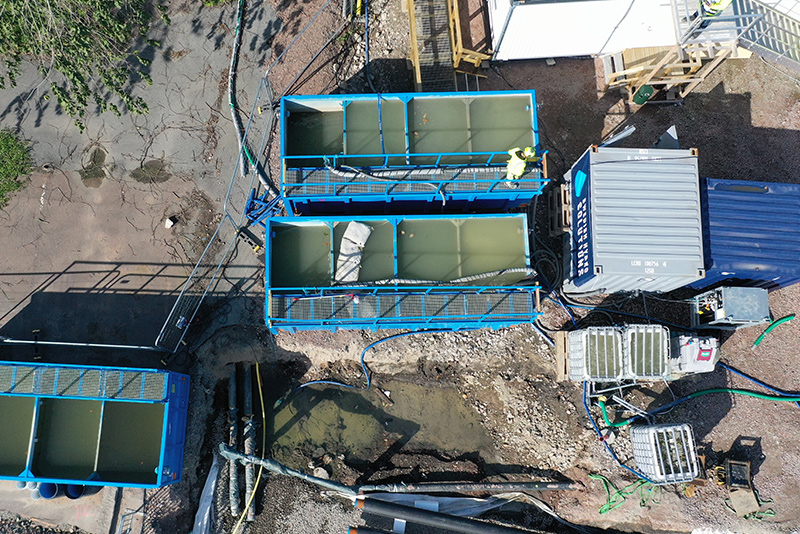
NCC had expected to need two major water treatment systems. But that turned out to not work in practice. Since the construction area is fragmented, six systems are now in operation, and a seventh has just been decommissioned. Consumables and services are also provided by Swedish Hydro Solutions.
Swedish Hydro Solution’s water treatment handles both particles and dissolved contaminants. The chitosan causes the particles to flocculate and settle. Dissolved organic pollutants and metals such as oil, solvents, zinc, lead and copper are filtered out in BioMedia filters. Ellen Samuelsson is pleased that the treatment method is free from the chemicals that are often associated with more traditional water treatment.
– It is incredibly positive that it is environmentally sustainable. It is also a robust system that is easy to maintain. We can manage much of it ourselves.
A designated NCC staff member takes care of sampling on a regular basis and a team takes care of the daily inspection and cleaning of the chitosan systems. The automatic and internet connected monitoring systems keep track of water flow, pH, conductivity and turbidity. An alarm is also connected, which quickly issues an alert if any values are exceeded. The chitosan socks are changed every two or three days, depending on the water flow-through.
Mobile units increase flexibility
Water treatment is a major budget item for NCC, and extremely important for production, explains Ellen Samuelsson. Failure to do so would halt the flow of production, which would result in high costs. The choice to hire Swedish Hydro Solutions was very much about capacity and flexibility. The small size and space efficiency of the treatment units are an advantage in a large construction project, where space is at a premium and a lot is going on at the same time. NCC has already taken advantage of the ability to move the treatment equipment a couple of times.
– It may seem expensive, but Swedish Hydro Solutions’ solution is the best choice in the long run, says Ellen Samuelsson.
More projects
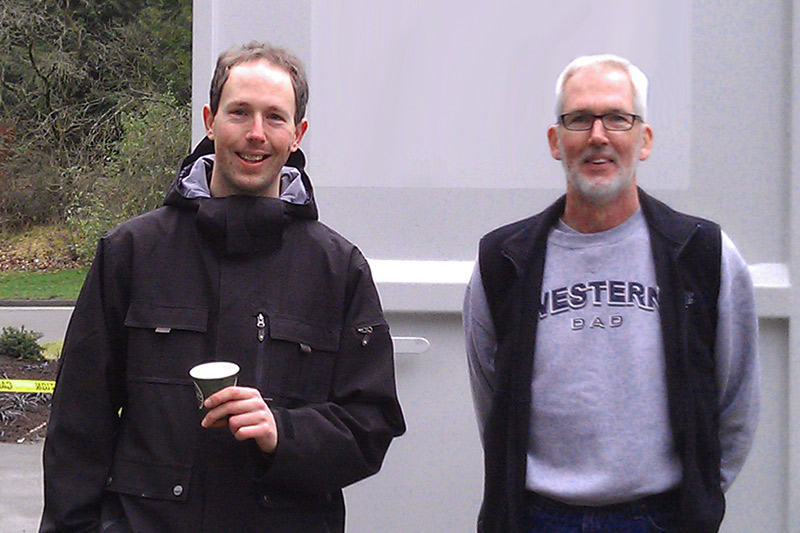
Washington Park Arboretum
The project sparked a close partnership between Jakob and John, who later worked together in the US and helped shape Swedish Hydro Solutions.
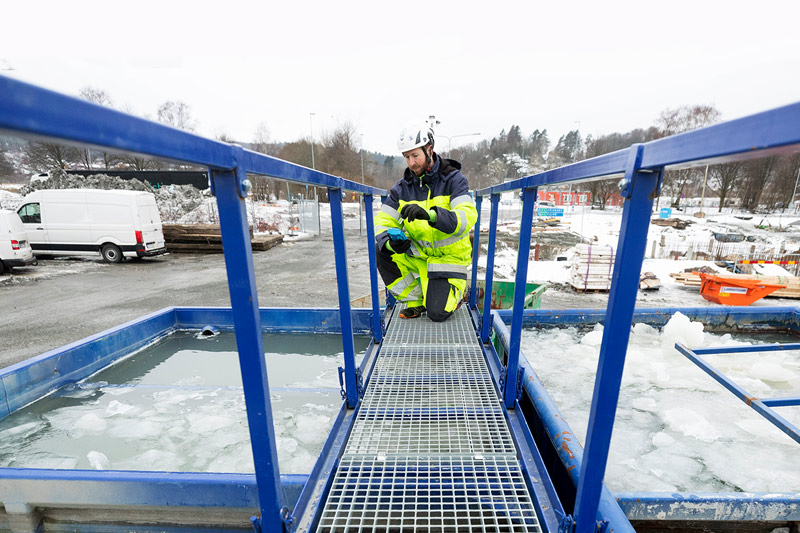
PEAB Kållered
Drilling slurry and strict treatment requirements created challenges for Peab at a major retail project in Kållered, as traditional methods were not sufficient.
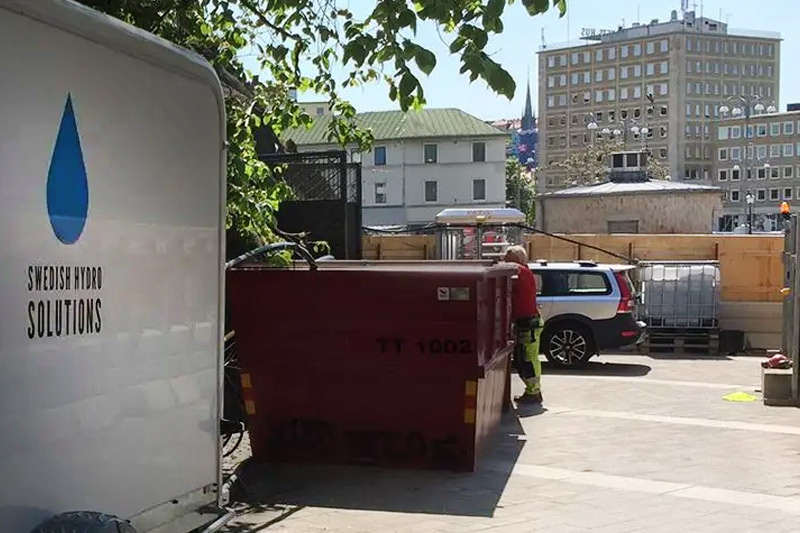
Treatment of drilling sludge
Drilling and wire‑sawing in rock use water for cooling, creating fine drilling slurry. Since runoff enters the Göta River, a Natura 2000 area, turbid water must be prevented.
Need more information?
If you’re seeking more insights about our projects designs or want tailored guidance for your unique project, get in touch with our water treatment specialists.